
 I hear it all the time: “Do you really need a website? It’s all social media these days. Nobody cares about websites.”
In fact, I’ve been hearing that for the last 19 years.
Every time a new “website replacement” comes along, whether it’s social media or some “all-in-one” marketing platform, the narrative is the same:
“I don’t need a website anymore. I can do it all here.”
And every time, it’s wrong.
Here’s why.
1. You Own Your Website
Owning your digital presence matters more than ever, especially if you want full control of your brand online in 2026. A website in 2026 is one of the few assets you truly own.
You don’t own Facebook. You don’t own LinkedIn. You don’t own YouTube.
And if you don’t own it, you’re exposed.
Your account can get banned. The algorithm can randomly throttle your reach. Your ad cost can increase at any time. The entire platform can cark it.
A good example of that:
I remember when Google Sites came out in 2008. As a web developer, I looked at it and thought, “Oh my golly gosh. People can make their own sites now. This is the end.”
Eight years later, they shut it down.
With your website, you might still rely on a hosting provider or a platform like WordPress, sure, but outside of that, it’s yours.
You are in control.
It’s a digital asset, too. Something that’ll increase the value of your business if you ever decide to sell (assuming your website doesn’t suck).
Facebook can be a traffic driver. LinkedIn can be a traffic driver. YouTube can be a traffic driver.
But your website is where you drive the traffic to.
No matter the platform, you should always include a link to your website so people can get the rest of the story and ultimately take the next step towards working with you.
Your website is the spider at the centre of the web. It’s your conversion centre.
With that being said, let me flag something naughty I see all the time. People embed YouTube videos directly onto their website without thinking. But at the end of the video, YouTube throws up a ribbon of related videos. If they click on this, that’s bad, because they’ve just left your site.
Traffic without conversion is just noise – at least if your goal is to make money.
3. It’s Infinitely Flexible
Social platforms box you in to rigid structures and designs.
Your text has to go exactly where they want it to go. And to get it there, you’re pasting it into their tiny text fields, praying your formatting survives the trip.
Images? Same story. But you’ve got to deal with all that file-too-large, aspect-ratio-not-supported BS as well.
Most “all-in-one” marketing platforms aren’t quite as rigid, but you’re usually stuck with a selection of templates.
On your website, though, you’re in total control.
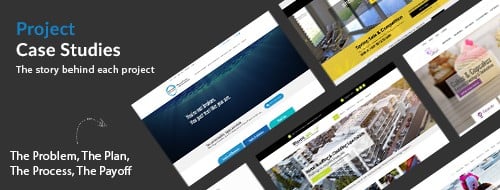
You can have a proper homepage, a separate page for each offer, an “about page,” another page for case studies – whatever structure you need.
Then, with the actual design and messaging, the sky’s the limit. You’ve actually got the space – the flexibility – to communicate what needs to be communicated. Text, images, video – you can put them wherever you want.
Without a website, you end up with a dozen platforms all linking to each other.
Instagram to YouTube. YouTube to LinkedIn. LinkedIn back to Instagram.
It’s messy.
Instead, each platform can just link to your website.
And then, from your website, you can link to everything else. (Think LinkTree, but objectively cooler.)
This might seem like a small advantage, but it’ll save you a lot of time and means you aren’t jamming a bunch of links into a tiny bio section.
5. It’s Your Source of Truth
When your position and message change, your website should be the first thing you update.
It’s your foundation. Your North Star.
Get the words right on your website, and then everything else you do becomes easier.
Social posts, emails, ads – instead of wrestling with a blank page whenever you write this stuff, you can open your website on your second screen and use it as a guide.
Sometimes, you can literally copy and paste chunks of text from your website onto other marketing assets. No need to reinvent the wheel. In fact, consistency is king.
6. It Supports Word of Mouth
People say, “We get all our business from word of mouth.”
That’s fine.
But if you’re at that proverbial family barbecue and someone says, “Go talk to Smarter Websites,” are you already 100% sold on my smarter ass… or are you going to Google me first?
Of course you’re going to Google me first. Which means you’ll visit my website.
So it had better do a damn good job of selling me!
TLDR: Word of mouth doesn’t bypass your website. It flows through it.
7. You Can Track Opportunities
Yes, some social platforms and “all-in-ones” come with tracking and analytics tools. But they’re usually limited to showing you only what’s going on inside that platform.
On your website, you decide what to track.
Notably, with a tool like Google Analytics, you can see if your activity on social media is actually generating leads, instead of just likes. It’s simple, really. If someone clicks a link on one of your social media posts (or your actual profile) and then lands on your website, it means they’ve moved beyond passive engagement. They’re curious enough to take action.
You can then see what that action turns into.
Did they read your services page? Did they check out your pricing? Did they use your contact form? Or did they leave in 10 seconds?
That kind of data is gold. It lets you see what’s working and what isn’t. It lets you test. And that’s really what marketing is: testing.
So, if your website is the spider at the centre of your marketing web, then a website without analytics is a spider without legs. It’d be pretty hard to feel the vibrations.
Say It With Me: Websites Aren’t Dead
Social media and other third-party platforms are useful, absolutely. But they’re rented land.
Your website is land you own.
It’s your central hub. Your source of truth. Your conversion centre. Your data engine.
That’s not something you leave in somebody else’s hands.
Okay, So Now You Know You Need a Website in 2026
But how do you build one that doesn’t make people want to rush to an emergency eye-washing station?
How do you make one that actually converts?
That’s exactly what I’ve covered in this free guide:
How to Build a Website That Attracts High-Quality Clients
Download it, take your time flicking through, and then, if you’d like some help putting it into action, I’ll be here.
Learn more about Peter and his team. Smarter websites is a proud member of D32 Business Network.
