


 One of the biggest misconceptions I see in business is this idea that once you build a website, the job’s basically done. You launch it. You sit back. You wait for the phone to ring. The reality is much simpler and much more uncomfortable. Websites Don’t Generate Leads. Systems Do:
A website on its own does not generate leads. It does not convert prospects into customers.
A website only works when it’s part of something bigger – a digital ecosystem.
If you don’t have the other pieces around it, all you’ve really built is a nice-looking place for nobody to visit. Or worse, a place where enquiries quietly fall through the cracks.
If you want your website – and your entire ecosystem – to actually work, there are a few fundamentals you can’t skip:
Fundamental #1: Getting People There in the First Place
Before anything else can happen, people actually need to arrive on your website.
That sounds obvious, but it’s where a lot of businesses fall over. They build the site and assume traffic will somehow appear. It won’t.
You have to actively tell the world your website exists.
I’m talking about traffic generation. SEO, blog posts, social media, email, paid ads, referral partnerships, guest content. The list goes on.
Paid ads, for example, can get you attention quickly, but organic traffic is what compounds over time. We’ve seen businesses increase their website traffic fivefold just by publishing high-quality blog posts consistently. Google likes fresh, relevant content. It sees that as a sign you’re active, that you’re answering real questions, solving real problems.
Fundamental #2: Turning Visits Into Actual Enquiries
Once people land on your website, the next step is conversion.
This is where a lot of pretty websites fall apart. They look great, but they’re not engineered for lead generation. They don’t show that you understand your prospects, and they don’t build trust. There’s no clear flow. No thought given to how someone actually moves from reading to enquiring.
A high-converting website, on the other hand, is deliberate.
The copy grabs attention, and it’s written to qualify the right people. Once it wins them emotionally, it wins them logically. It answers all their questions and smashes through their objections before they can even voice them. Then, there’s a clear, valuable call to action.
The site isn’t there to impress – like some graphic designer’s portfolio piece. It’s there to start conversations with the right prospects.
Traffic without conversion is just noise.
Fundamental #3: Catching the Leads Before They Disappear
I’ve spoken with so many business owners who tell me, very confidently, that they track their leads and have systems in place.
Then we look behind the scenes, and it turns out they don’t.
I’ll give you a real example.
We had a client who wanted us to run Facebook ads for them. Before we touched anything, we looked at their setup. They were getting website enquiries, but there was no automation. They weren’t going through to a customer relationship manager (CRM). The business just manually scrolled through their enquiries in their inbox when they had a spare moment, and responded willy-nilly.
We turned the job down. Kind of.
This is because I already knew how it would all end. We’d make great ads and generate plenty of high-quality leads for them, but without any systems in place to capture the leads, our efforts wouldn’t amount to much, and then the client would blame us.
Truth is, marketing doesn’t fix broken systems; it just amplifies what’s broken.
In the end, we said we’d run the ads for the client, sure – but only if they set up a CRM first. Which they did. With us.
Fundamental #4: Continuing the Conversation and Nurturing Leads
Once that client put a CRM and automations in place, everything changed.
Someone would make an enquiry and then immediately receive a confirmation email. In the meantime, the lead would show up in their CRM, which would soon fire off a nurture sequence to continue building understanding and trust. The conversation continued without relying on someone being around to manually check enquiries.
What surprised our client the most was that they didn’t even need ads straight away. Their leads from their organic social media marketing were enough on their own for now. They’d just been letting them slip through the cracks.
That’s what happens when follow-up is built into your marketing ecosystem. Leads don’t just rot in your inbox. They’re nurtured, and guided through your marketing funnel.
Fundamental #5: Seeing What’s Actually Going On
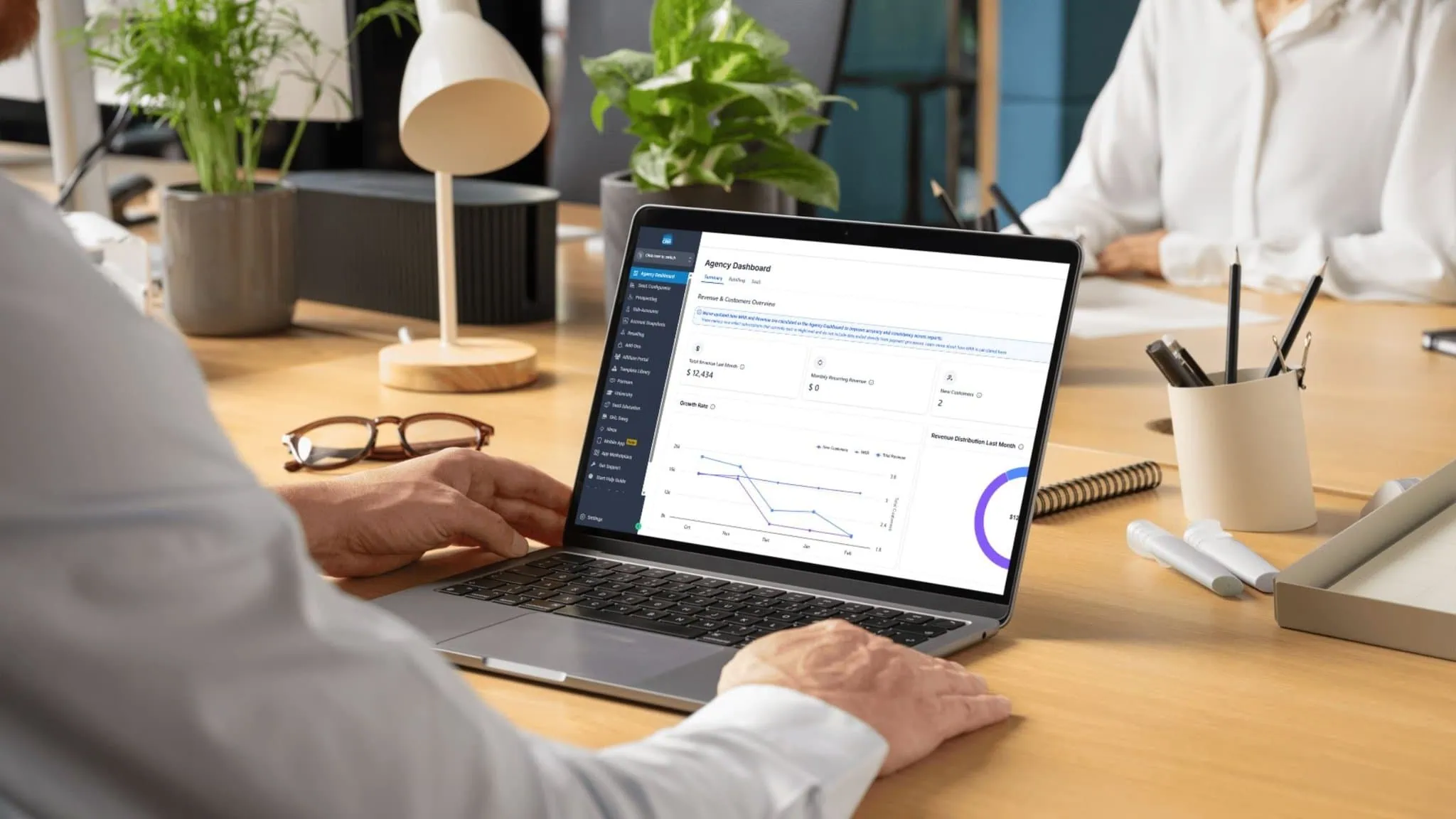
The final piece most businesses miss is visibility. In other words, tracking and analytics tools.
These aren’t just “nice to have.”
They exist so you can see where traffic is coming from.
- Which channels are working
- What content is driving visits
- Where people are clicking
- Where they’re dropping off
With heat mapping tools, you can literally see what people are doing on your website.
- Where their cursor moves
- Which buttons are getting clicked
- Which calls to action are being ignored
More importantly, tracking and analytics tools allow you to refine things over time.
Make one change (like the headline), split test it, see which one performs better – the original or the test – and then, when you have enough data, kill the loser and send all your traffic to the winner. Then do another split test with something else. And again, and again… until your website’s a lean, mean converting machine.
Tracking and analytics are what allow you to make adjustments based on real behaviour instead of guesswork. They allow you to test, iterate, and test again. And any marketer worth their salt will tell you the same thing:
Marketing is testing.
You never know how something’s actually going to perform until you get it live and see how people engage with it.
Why It All Has To Work Together
None of these fundamentals work properly in isolation.
Traffic without conversion is wasted effort. Conversion without a CRM leads to lost enquiries. A CRM without follow-up kills momentum. And without tracking, you’re doing all of this blind.
When everything is connected, though, that’s when a website finally does what people expect it to do: get you more leads – better leads – and more money.
Of course, we’ve just scratched the surface here.
If you want to dive deeper, grab our free guide:
How to Build a Website That Attracts High-Quality Clients
Download it, take your time flicking through, and if you’d like some help putting it into action, I’ll be here.
Learn more about Peter and his team. Smarter websites is a proud member of D32 Business Network.
