

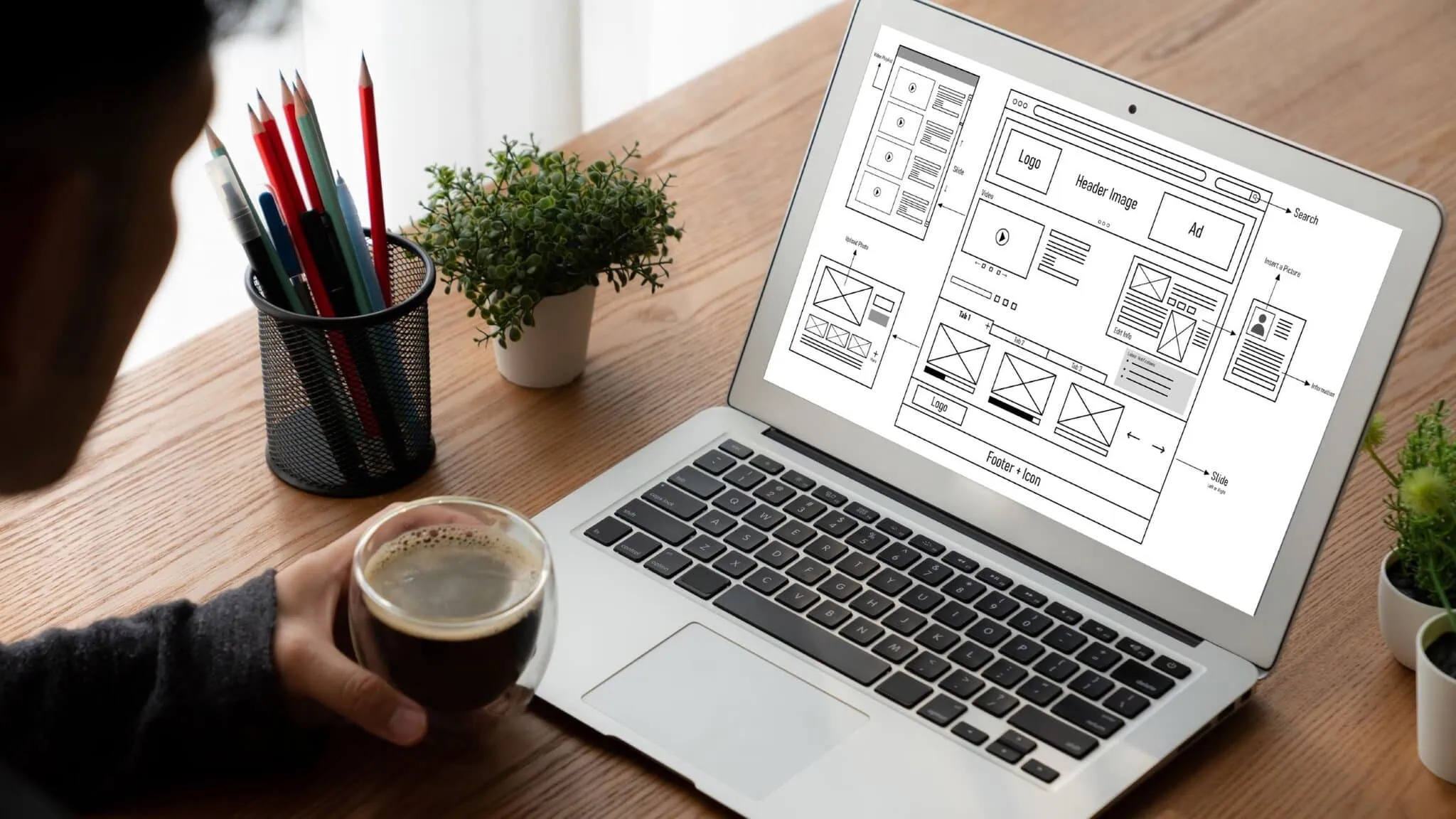
 About 80% of my website work is rebuilds. On the surface, website rebuilt usually look fine when I get them. Some of them are even graphically gorgeous. But when you look at the data, it’s obvious they’re not doing what they’re meant to do:
Convert.
What’s worse is that a lot of these websites have already been rebuilt.
The business knew something wasn’t right, so they went back to fix it. New platform. New look. And somehow, they managed to make all the same mistakes again.
Let’s break down the big ones.
Big Mistake #1: Talking About You
This is where most websites shoot themselves in the foot.
The copy usually goes like this:
“We do this. We do that. We’ve been around for 20 years. We’re passionate about X.”
It’s just so wrong.
Most of the time, this happens when a business owner gets too involved.
They think the message is about them. But they are not their client.
On top of that, they can never quite get the tone right. Their “professional” often comes across as stiff and jargony.
The result is predictable: copy that’s completely deaf to the market.
Instead of someone landing on the site and thinking, “This is for me,” they run for the hills.
Professional copywriting matters because it forces the focus back where it belongs: on the prospect, their number-one problem, and how the product or service makes that problem go away.
Your website is a capital investment, and your message is the backbone. Get it right, or get out of the way and let the experts handle it.
Big Mistake #2: Cringey Stock Images
Stock images are… fine.
Good-quality stock images can work.
But using personal images (and I mean real ones, not an AI fever dream) makes a world of difference.
Images of you and your team in your office. Images of you working with clients, on-site. Images of you presenting, running workshops, doing the actual work.
For years, I used stock images as my hero section image because they represented the core business. Eventually, I replaced it with a photo of me drawing on a whiteboard.
When people see that image and then meet me later on, whether that’s in person or on Zoom, they already know what I look like. They already know they’re in the right room, with the right Peter, and they’re already at ease.
That familiarity builds trust. And trust matters when someone’s deciding whether to do business with you or not.
Your photos can be high-quality and still be generic. And generic doesn’t convert.
Big Mistake #3: No Lead Magnet (or Expecting Too Much)
Back in 2007, we were getting conversion rates of around 70% for our lead magnets.
Now we’re lucky to get 7%.
People are conditioned. They see a lead magnet and think, “I know what’s going to happen. They’re going to ask for my email address in exchange for this, and then they’ll attack my inbox for the next decade.”
I’m not saying lead magnets don’t work. They’re still absolutely valid.
But their job isn’t to magically convert someone on the spot. Their job is to support the prospect’s decision.
A good lead magnet demonstrates your expertise. It’s a positioning tool. Even if someone doesn’t convert, it still does its job: showing them that you understand their problem and know exactly how to fix it.
Having no lead magnet at all is a total blunder, because it leaves you with no clear CTA for the people who are interested but not yet ready to talk.
Having a bad lead magnet is even worse, because then the message you’re sending is basically this:
“If this lead magnet is rubbish, you can probably expect the service to be rubbish too.”
Rethink Before You Redesign
High-converting websites aren’t rocket science, and yours might not actually need a visual overhaul.
- Write to your target market
- Use real photos of your team
- Include a useful lead magnet
Get these fundamentals right, and you’ll be leaps and bounds ahead of the competition.
That said, it can be hard to know exactly where to start.
So if you want a simple way to sanity-check what’s working, what’s not, and what to fix first, grab our free guide:
How to Build a Website That Attracts High-Quality Clients
Download it, take your time going through it, and if you’d like a hand putting it into action, I’ll be here.
Learn more about Peter and his team. Smarter websites is a proud member of D32 Business Network.
